
Circularity
Material circularity is crucial for businesses aiming to lower their carbon emissions, as it reduces raw material consumption, energy usage in production, and waste generation while extending product life. By reusing and recycling materials, companies minimize the need for energy-intensive extraction processes, decrease waste-related emissions, and build a more sustainable supply chain.
The challenges of implementing material circularity for businesses working to lower their carbon emissions include the need for significant changes in product design, manufacturing processes, and supply chain management practices. Adopting circularity requires overcoming traditional linear economy mindsets and investing in new technologies and infrastructure to enable efficient resource recovery and recycling.
To reduce waste-related emissions, companies must prioritize waste reduction and reuse programs, increased industrial, commercial and household recycling, and better management of hard-to-recycle materials. By embracing and promoting circular practices, businesses in the state can actively reduce their environmental footprint and advance progress toward their organization’s net-zero goals.
Case Studies & Solution Insights
-
Interface Case Study
Discover how Interface, a global leader in flooring, is revolutionizing sustainability with carbon-neutral products and an innovative carpet take-back program—explore their journey into the circular economy.
-
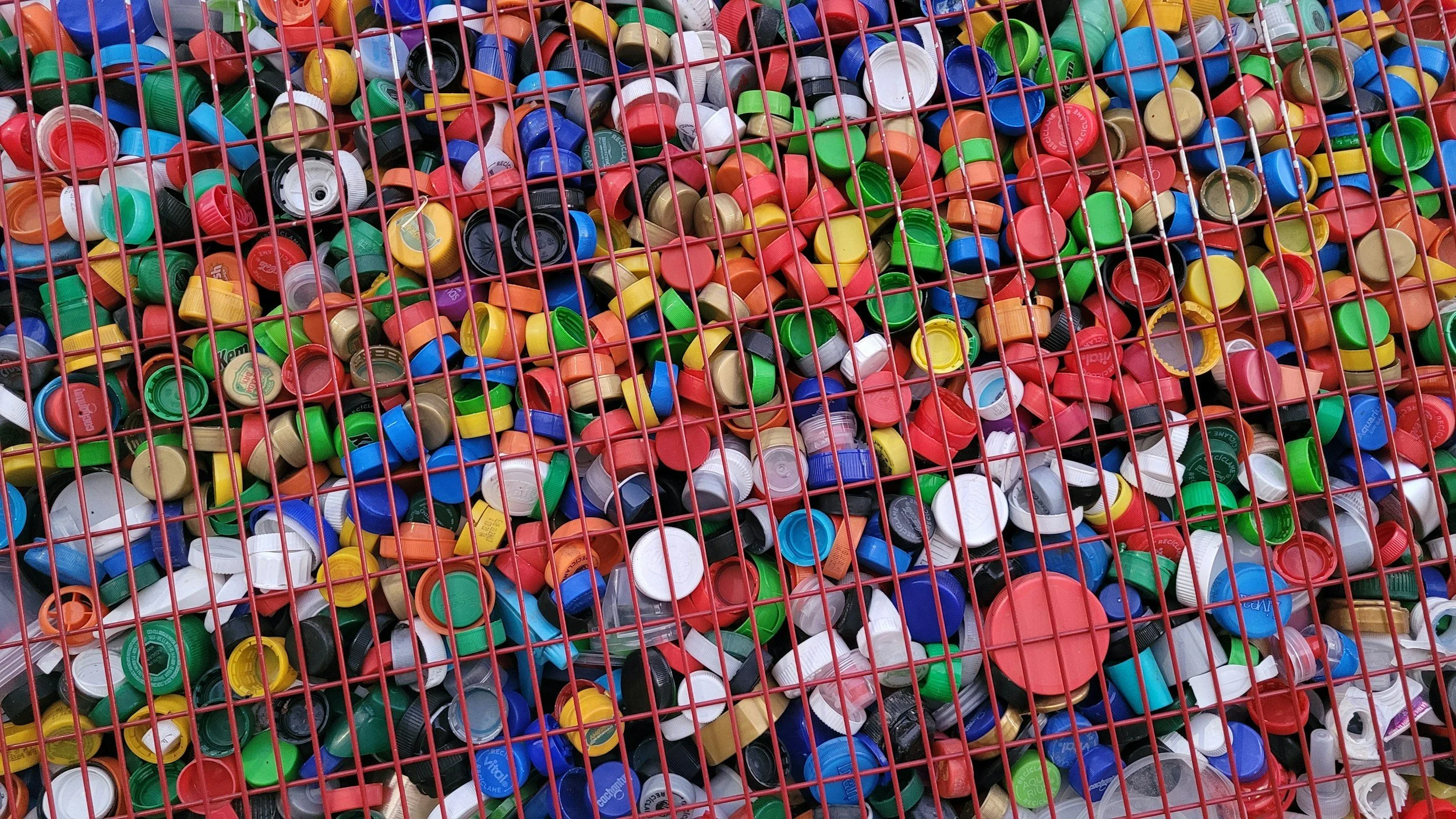
Closing the Loop: The Business Case for Plastic Circularity
Understanding plastic circularity basics empowers businesses to reduce waste, capture value from recycled materials, and meet growing consumer and regulatory demands for sustainable practices.
Latest News & Articles Around Circularity Solutions
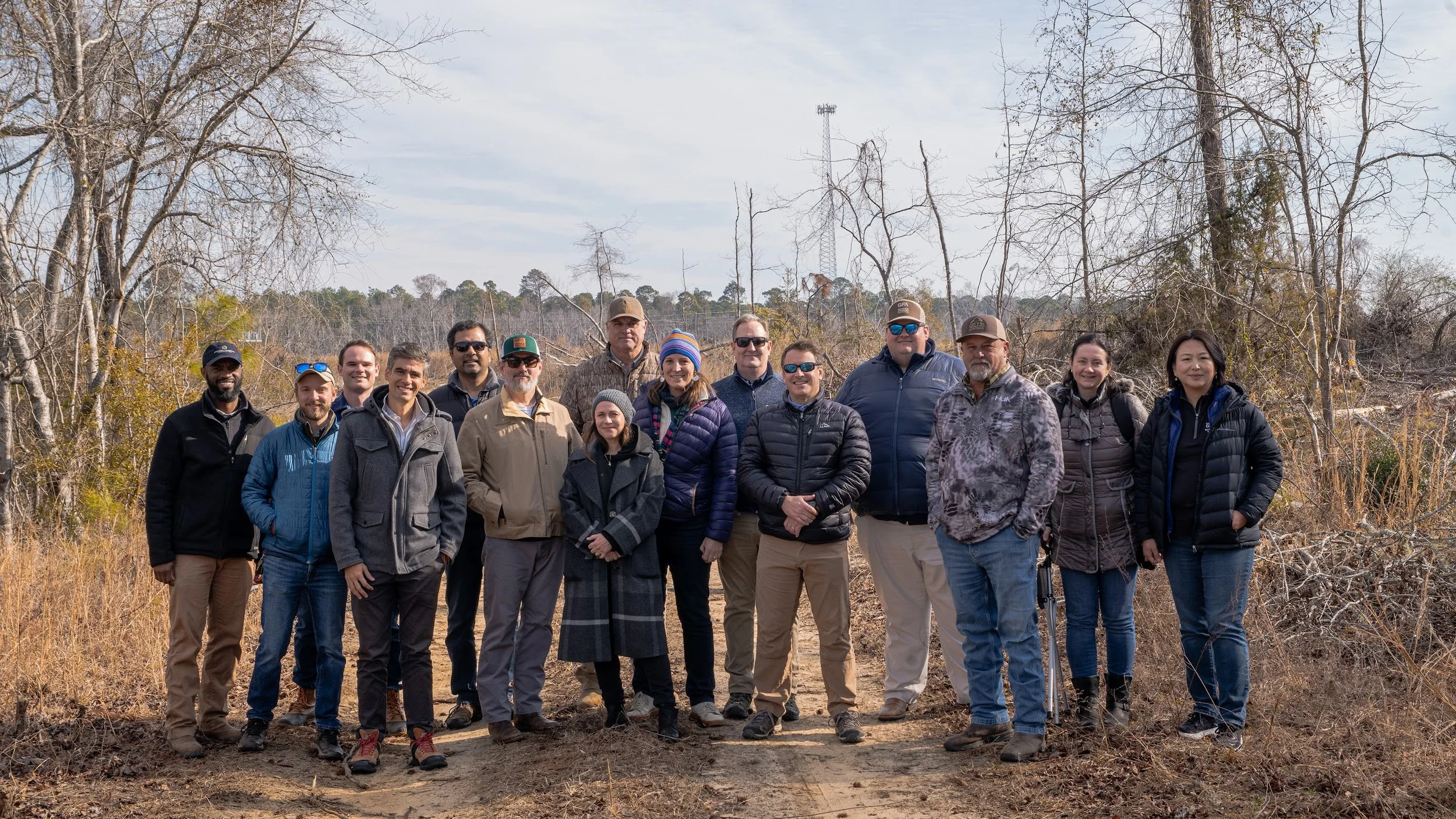
A field tour in Southeast Georgia brought together forestry experts, researchers, landowners, and businesses to examine the challenges facing Georgia’s forests, including hurricane damage and declining timber markets. Led by partners including the Georgia Forestry Foundation, the Ray C. Anderson Center for Sustainable Business at Georgia Tech, Clemson University, and the University of Georgia, the tour highlighted the potential of a proposed Georgia Carbon Exchange to create a voluntary marketplace for high-quality carbon credits. The initiative aims to provide new economic incentives for private landowners to keep and manage forests, supporting carbon sequestration, rural economies, and long-term forest conservation across Georgia.
The Drawdown Georgia Business Compact is accelerating climate solutions at scale by mobilizing Georgia’s business community to reduce emissions while creating economic value. Launched in 2021 as an initiative of the Ray C. Anderson Center for Sustainable Business at the Georgia Tech Scheller College of Business, the Compact now includes 80 member organizations committed to integrating sustainability into core business strategy.
Through a growing community of practice, innovative initiatives like the Georgia Carbon Exchange, energy management and emissions reporting support for small and mid-sized suppliers, and student-driven consulting and research, the Compact is turning collaboration into action. These efforts help businesses stay competitive, support landowners and local economies, and advance Georgia’s path toward net-zero emissions. By aggregating demand, aligning industry leaders, and investing in practical climate solutions, the Compact demonstrates how collective action can drive measurable environmental and economic impact across the state.
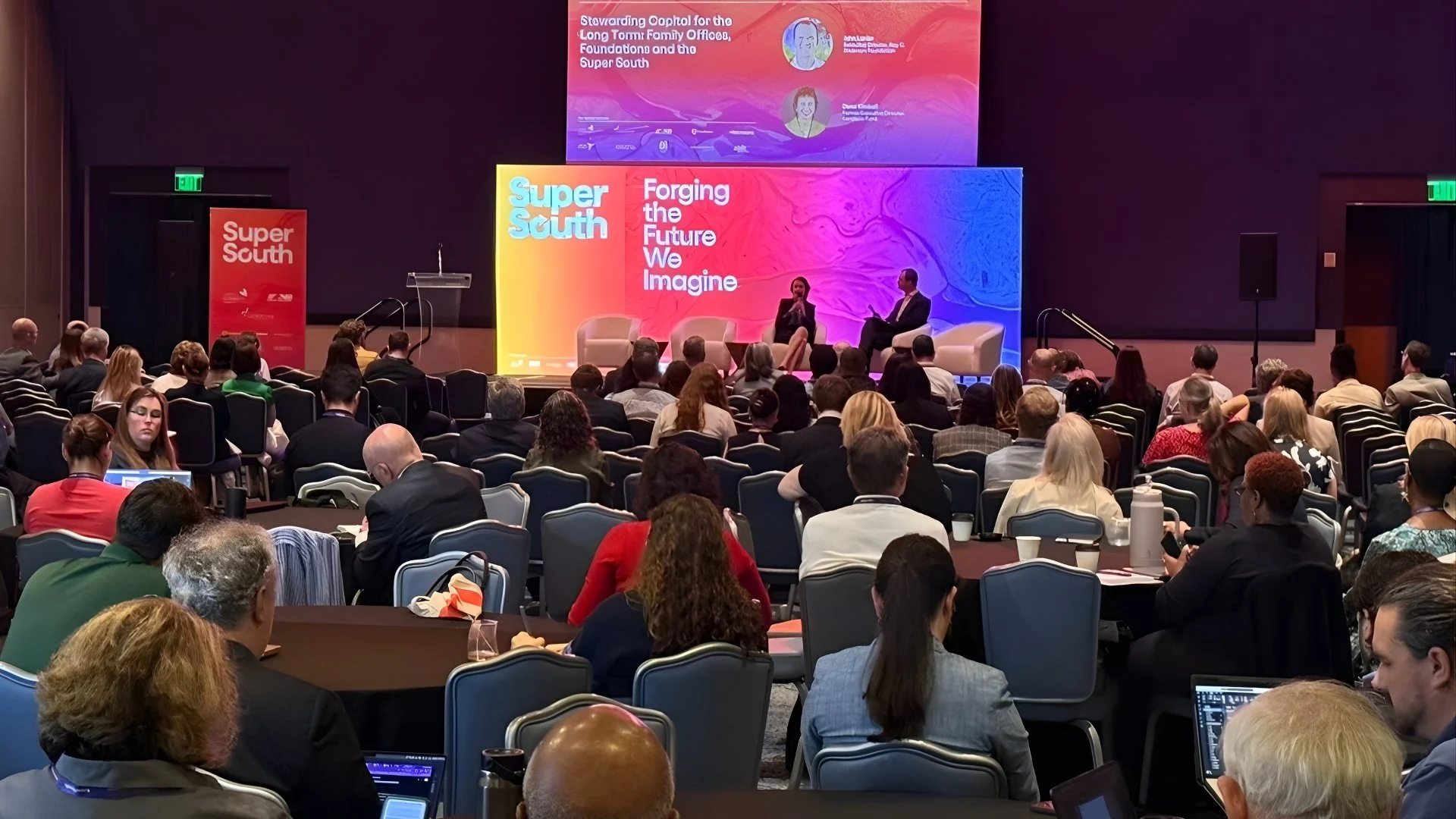
In October, scholars and practitioners gathered in Atlanta for the fourth annual Symposium on Environmental and Social Sustainability in Supply Chains, co-hosted by Georgia Tech Scheller College of Business and Indiana University Kelley School of Business.
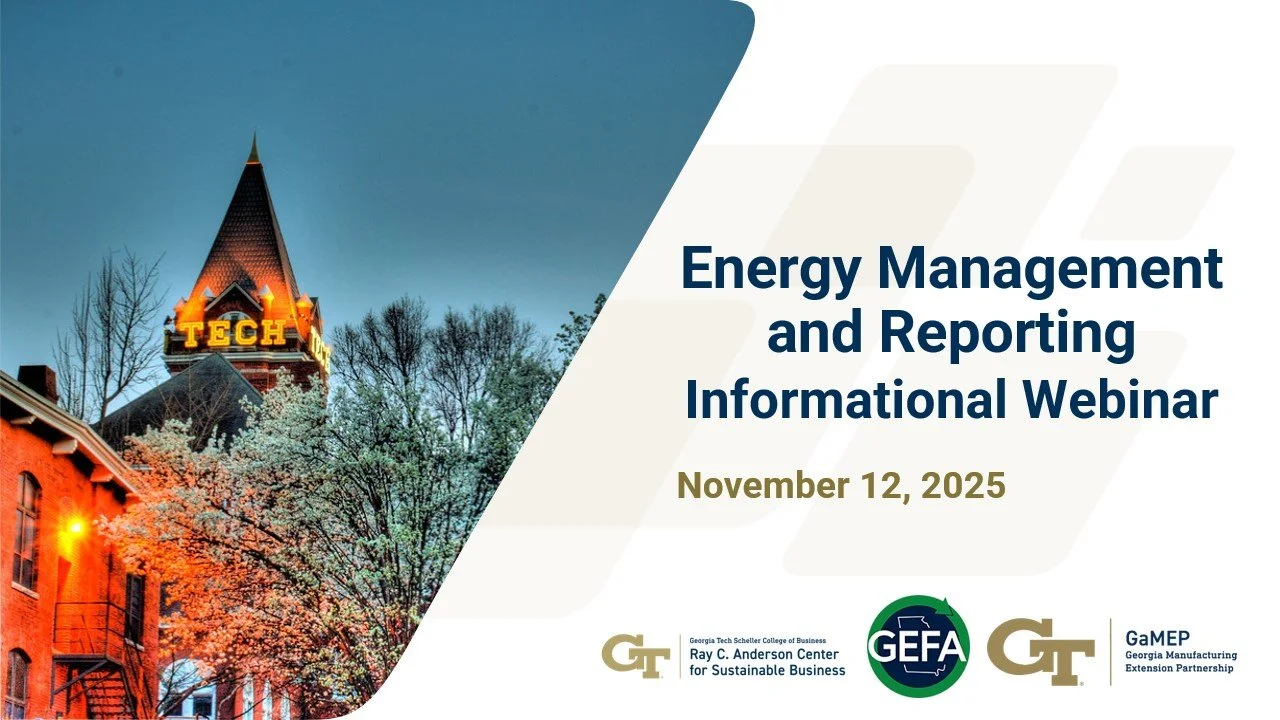
Georgia Tech’s Ray C. Anderson Center for Sustainable Business, in partnership with the Georgia Environmental Finance Authority (GEFA), developed a new Energy Management & Reporting Executive Education Course. This custom course is a practical, four-month program designed for small and mid-sized enterprises (SMEs).
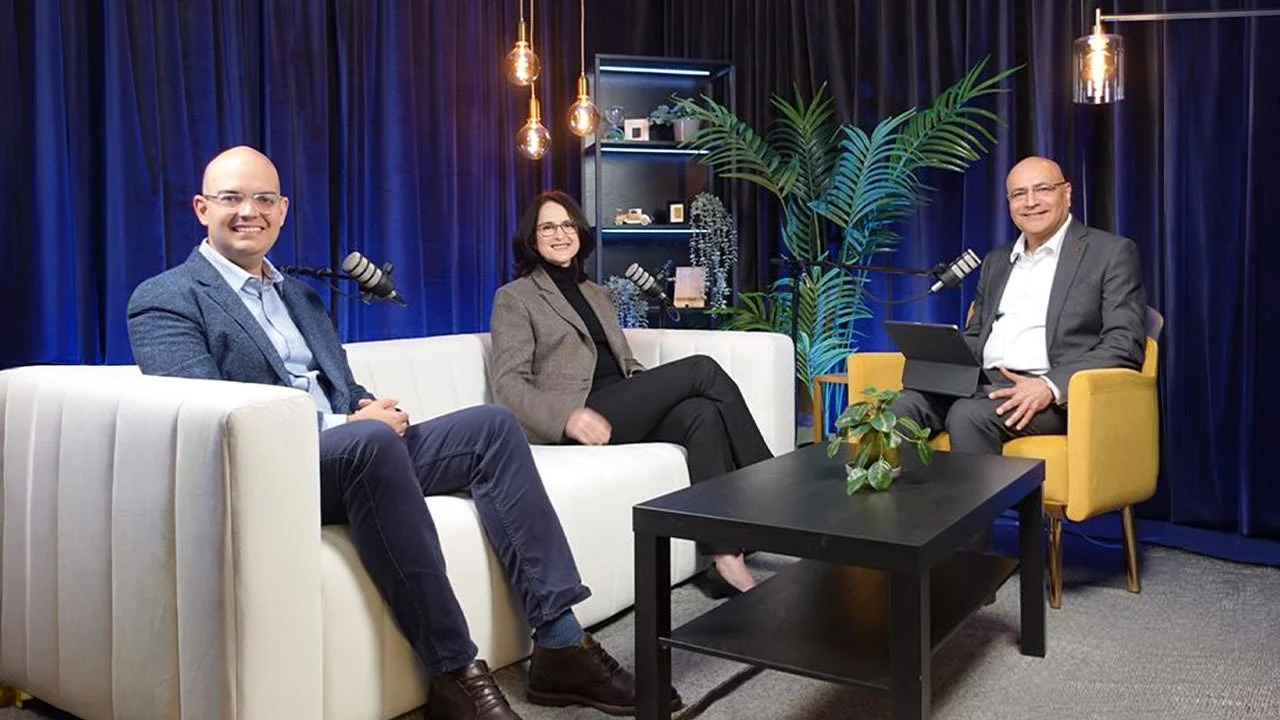
If you missed the live info session, you can now watch the full webinar recording
The Ray C. Anderson Center for Sustainable Business and the Drawdown Georgia Business Compact are launching a free Energy Management and Reporting course to help Georgia SMEs stay competitive through improved efficiency, cost savings, and readiness for emerging emissions reporting requirements.
The Drawdown Georgia Business Compact unites companies across the state to scale practical climate solutions for Georgia’s economy, environment, and communities. Learn how 80+ member businesses—from startups to global brands—are collaborating toward a net-zero future by 2050.
Georgia Tech’s Ray C. Anderson Center for Sustainable Business, in collaboration with the Georgia Forestry Foundation and UGA’s Warnell School of Forestry, is leading an innovative effort to create a Georgia-grown forest carbon exchange. This first-of-its-kind, state-specific initiative connects small-acreage landowners with companies seeking high-quality carbon credits—keeping both the economic benefits and climate impact close to home.
Supported by the U.S. Forest Service and activated through the Drawdown Georgia Business Compact, the project builds on Georgia’s natural strengths in forestry while addressing urgent challenges. Following Hurricane Helene’s devastation of more than 1.4 million acres of forest and recent mill closures that have reduced timber markets, landowners face mounting financial pressures. By piloting a voluntary carbon market designed for Georgia, the initiative provides new income opportunities for rural communities while ensuring buyers receive vetted, high-integrity carbon credits.
Georgia Tech Scheller College of Business MBA students in the Sustainable Business Consulting Practicum partnered with Brightmark to explore new ways to source feedstocks for renewable natural gas (RNG). By analyzing underutilized waste streams, the student team identified opportunities to transform organic waste into profitable, climate-positive energy solutions. Their recommendations will help Brightmark advance its vision of a world without waste while supporting Georgia’s path to net zero emissions by 2050.
MBA students from Georgia Tech’s Sustainable Business Consulting Practicum partnered with Creature Comforts Brewing Co. to develop actionable strategies for reducing Scope 3 emissions. The project provided real-world insights into supply chain sustainability, energy use, and fleet electrification—demonstrating the power of collaboration between future business leaders and Compact members.